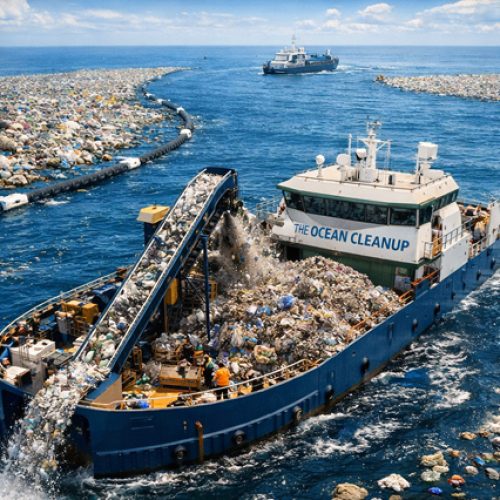
A global initiative aimed at reducing plastic pollution has reached a major environmental milestone: more than 45 million kilograms (about 100 million pounds) of plastic waste have been removed from oceans and rivers around the world. The achievement represents one of the largest coordinated cleanup efforts ever carried out in marine environments.
The effort is led by The Ocean Cleanup, an environmental organization that has developed specialized technology to capture floating plastic debris both in the open ocean and in rivers before it reaches the sea. Since beginning large-scale operations, the organization has expanded its cleanup systems and refined its technology, allowing it to collect increasing amounts of plastic each year.
Record-breaking progress in a single year
Much of the recent progress came during 2025, when cleanup systems removed more than 25 million kilograms of plastic from aquatic environments. That single year accounted for more than half of the organization’s lifetime total, highlighting how quickly the cleanup operation has scaled in recent years.
These removals include debris collected from large ocean gyres such as the Great Pacific Garbage Patch, where floating plastic accumulates in massive quantities due to ocean currents. The project also targets rivers, which are considered one of the largest sources of plastic pollution entering the ocean.
Tackling plastic at the source
To reduce the flow of waste into the sea, the organization has increasingly focused on intercepting plastic in rivers. Floating collection systems are designed to capture trash carried by currents, preventing it from reaching the open ocean. This strategy complements offshore systems that gather plastic already circulating in ocean gyres.
A milestone—but not the end of the problem
While removing tens of millions of kilograms of plastic is a significant achievement, scientists note that the scale of the problem remains vast. Millions of tons of plastic are estimated to enter the oceans every year, meaning cleanup projects must be paired with broader solutions such as reducing plastic production, improving recycling systems, and strengthening waste management worldwide.
Looking ahead
The long-term goal of the organization is ambitious: eliminate 90% of floating ocean plastic by 2040. Achieving that target will require continued technological innovation, expanded river interception systems, and global cooperation to stop plastic pollution at its source.
If the current pace of progress continues, the 45-million-kilogram milestone could represent only the beginning of a much larger effort to restore the health of the world’s oceans. 🌊♻️
Link to the full article: Record ocean cleanup removes 45 million kilograms of plastic